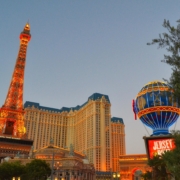



Las Vegas Gambling Potential: Why Las Vegas Sphere Stock is Deeply Discounted But Laden with Opportunity

Las Vegas Gambling Potential: Why Sphere Stock is Deeply Discounted and Ready to Pay Off

Despite a notable 16% gain this week, shares of Sphere Entertainment (NYSE: SPHR), the company behind the iconic Las Vegas Sphere, are down 19.37% year-to-date. This decline highlights the stock’s apparent undervaluation, drawing significant attention from market observers who see potential synergy between the venues massive entertainment draw and the broader momentum of Las Vegas gambling.

Sphere entertainment
Image by iira116 from Pixabay

Current Market Analysis

  • Sphere Entertainment’s market cap doesn’t reflect its opportunities
  • The “Dolan discount” is seen as a contributing factor
  • Wall Street analysts concur that shares are undervalued

Recently, Barron’s highlighted Sphere in an issue that argues the stock is drastically undervalued. John Rogers Jr., the founder of Ariel Investments, claims Sphere is trading at nearly a 50% discount to his estimated net asset value. Currently, Sphere has a market capitalisation of $1.17 billion, which is around half of the $2.3 billion spent to establish the Sphere in Las Vegas.

A significant factor impacting Sphere’s financials was the recent restructuring of MSG Networks, the regional sports network with prior substantial liabilities. Sphere has managed to reduce its debt from over $800 million to $350 million.

Dolan Discount: An Ongoing Challenge

Another difficulty for Sphere is the persistent “Dolan discount”, attributed to the Dolan family’s control of Sphere and other public companies including Madison Square Garden Entertainment and Madison Square Garden Sports (NYSE: MSGS). This situation raises concerns that shareholder interests may take a back seat to family control.

As reported by Barron’s, this discount is evident in Madison Square Garden Sports, valued at $4.61 billion, despite the New York Knicks and New York Rangers having a combined worth exceeding $11 billion.

Reasons for the Undervaluation

Wolfe Research analyst Peter Supino provided further data indicating that Sphere is perpetually undervalued. His findings suggest that the Las Vegas Sphere alone is worth about $1 billion, with the upcoming Sphere in Abu Dhabi contributing an additional $750 million.

In total, these values exceed Sphere’s current market valuation by a significant margin, not counting $200 million potential cash inflow from the RSN and revenue from forthcoming initiatives.

While there is speculation regarding the sale of Sphere to a live entertainment company, this could be challenging. Particularly since CEO James Dolan received $18 million in equity compensation last year, implying he could view the stock as too appealing to let go.

Looking Forward

The consensus among analysts is distinctly optimistic regarding Sphere stock, with six out of ten recommending a “buy” or “strong buy”. The average price target suggests a potential uplift of 47%, hinting at promising future growth. Here are some key takeaways:

  • Strong recommendation from analysts indicates confidence.
  • Significant potential upside, given the undervalued status.
  • Improved financial health following debt restructuring.

In summary, while Sphere Entertainment faces challenges such as the “Dolan discount” and current market perceptions, the underlying fundamentals suggest significant potential for recovery and growth. Investors looking for value opportunities might find Sphere stock particularly enticing amidst its discounted price.

NCAA Could Soon Lift Prohibition on Professional Sports Betting

NCAA Could Soon Lift Prohibition on Professional Sports Betting

  • NCAA currently bars athletes and coaches from betting on professional sports
  • Reversal of policy could arrive as soon as June

In the wake of the expanding legal sports wagering landscape in the US, which followed the Supreme Court’s 2018 ruling on the Professional and Amateur Sports Protection Act (PASPA), the NCAA (National Collegiate Athletic Association) has generally prevented its athletes, coaches, and staff from engaging in sports betting activities related to professional sports. However, this might be on the verge of changing.

Sports betting
Image by AidanHowe from Pixabay

Recently, the Division I Board of Directors voted 21-1 in favour of moving forward with a possible rule change, sending it to the D-I Council for further discussion. Sources close to the matter hinted at growing support for allowing NCAA-affiliated individuals the freedom to wager on professional sports, with a decision potentially arriving next month.

The board directed NCAA staff to formulate options for the relevant committees regarding a safe harbour, limited immunity, or reduced penalties for student-athletes who wish to engage in sports wagering but also seek help for gambling problems.

If the D-I Council approves this change, it is important to note that the existing ban on betting on college sports will remain intact.

NCAA Pro Sports Betting Ban Arguably Outdated

The rationale behind the NCAA’s prohibition on betting by athletes, coaches, and staff is well-meaning, but it teeters on the edge of being excessive and outdated. It restricts anyone affiliated with NCAA institutions from betting on any professional sport that also has a collegiate counterpart.

This means that NCAA-affiliated individuals cannot place bets on the NBA, NFL, NHL, or Major League Baseball (MLB). The ban extends to other professional entities like the WNBA and professional golf and tennis as the NCAA oversees the collegiate versions of these sports. Essentially, if you are an NCAA-affiliated athlete, coach, or staff member, your chances to wager on professional sports are quite limited, reducing it to combat sports and motorsports.

Interestingly, the Division III Management Council is also considering a proposal that could allow its athletes and staff to bet on professional sports, demonstrating a ripple of support across the NCAA.

Jason Verdugo, the chair of the council and athletic director at Wisconsin-Eau Claire, stated that this exploration represents a commitment to harm reduction and education. The belief is that deregulating betting on professional sports may encourage student-athletes and staff to seek help for gambling issues.

NCAA Should Prioritise Issues Surrounding College Sports Betting

To date, most infractions related to pro sports betting discovered by the NCAA have been minor, yielding little more than a warning. In contrast, the significant sports betting controversies have centred around college games inherent to both pre- and post-PAPSA times. Recent instances involve Iowa State athletes charged with felony identity theft to bypass betting age restrictions and the ousting of former University of Alabama baseball coach Brad Bohannon for divulging player availability information prior to public release.

The NCAA’s tough stance on serious infractions regarding college betting reflects its prioritisation to enhance athlete safety and maintain competition integrity.

Key Facts About NCAA Betting Policies:

  • The NCAA’s ban on pro sports betting covers all professional sports available at the collegiate level.
  • Deregulation discussions point toward potential future changes that would ease the current restrictions on betting among athletes.
  • There is a focus on developing a clear framework to support responsible gambling within student-athlete communities.
  • The NCAA has historically encountered more significant problems with wagering issues surrounding college-level games.

Concluding Thoughts

The potential lifting of the NCAA’s prohibition on professional sports betting could mark a significant shift in its policy framework. By allowing athletes to engage in sports wagering responsibly, while still enforcing rigorous regulations to tackle gambling issues among student-athletes, the NCAA may be on the road to openness, education, and safety in the gambling landscape.

Las Vegas Casinos Dining Update: Cathédrale Closing and the Future of Restaurant Renovations | 10BET

Las Vegas Casinos Dining Update: Cathédrale Closing and New Restaurant Ventures on the Horizon

As the landscape of Las Vegas casinos continues to evolve, even the most iconic dining destinations face transitions, such as the news that Cathédrale at Aria is set to serve its final meal on May 31. A standout fixture among the upscale culinary offerings of Las Vegas casinos, this restaurant opened nearly two years ago following a significant renovation as a premier creation of Tao Group Hospitality. Accommodating up to 266 guests, it aimed to replicate the success of its New York City flagship by providing the stunning ambience and elite coastal cuisine from France, Spain, Italy, and Greece that high rollers and food enthusiasts expect from the worlds premier gaming destination.

Cathedral
Image by kamilasmrekovska from Pixabay

The reasons cited for the closure have not been disclosed, a common trend in Vegas where restaurants and shows rarely close without challenges like poor performance or scandals — and in this instance, no such scandal has been reported.

As Cathédrale closes, there are no immediate plans for the space, although the East Village location remains unaffected.

Exciting Dining Developments

Open table
Image by Pezibear from Pixabay

SW Steakhouse located at The Wynn is also preparing for an imminent closure for a remodel courtesy of renowned designer Todd-Avery Lenahan. The revamped design will lean towards darker tones, optimising stunning views of the Lake of Dreams. Meanwhile, the temporary Four Sixes Ranch Steakhouse at Tableau is expected to remain in operation during this renovation period.

Additionally, documents from the Clark County Planning Commission, per Vital Vegas, suggest plans for a boating dock and patio at Bellagio’s lake. This may herald the arrival of a new, as-yet-unknown seafood restaurant, adding to the culinary landscape.

Further exciting news includes the approval of designs for a new Grand Tiki Las Vegas, a Polynesian restaurant and bar, taking over a shuttered credit union just east of the Strip.

More Culinary Ventures On the Way

  • Four Queens is launching a new cafe tentatively named Some Like It Hot.
  • Salt & Straw, an ice cream chain with several locations across the country, will be opening a new store at The Flamingo, situated between Gordon Ramsay Burger and the former Margaritaville.
  • The food court in The Fashion Show Mall will soon welcome Zoi’s Mediterranean Cuisine.
  • Crazy D’s Hot Chicken will establish a new location at 5840 S. Rainbow Blvd., with multiple outlets already in operation throughout Reno and other areas.

Final Thoughts

As Las Vegas’ dining scene evolves, the closure of Cathédrale marks both an end and a beginning. With exciting renovations and new culinary projects on the horizon, the city continues to thrive as a vibrant hub for food enthusiasts. Stay tuned for further updates on dining developments in Las Vegas, where the culinary landscape never stays still for long!

UFC 315: How to Find the Best Sports Betting Odds for Montreal’s Biggest MMA Fights | 10BET

UFC 315: Expert Analysis and Best Sports Betting Odds for the Return to Montreal

Big news for fight fans and those looking to sharpen their sports betting strategies! The UFC is making its return to Montreal for the first time in ten years, showcasing a thrilling event, UFC 315, at the Bell Centre. This highly anticipated occasion features a high-stakes welterweight title battle between Belal Muhammad and Jack Della Maddalena, providing the perfect opportunity for enthusiasts to test their predictions. In addition, fans can look forward to other incredible matchups, making this an event you certainly won’t want to miss!

Key Highlights

  • Hall of Famer Georges St-Pierre as Cornerman: St-Pierre, the legendary fighter, will be in the corner of fellow Canadian Aiemann Zahabi, who is taking on former champion Jose Aldo.
  • Muhammad Favoured in Welterweight Title Fight: Belal Muhammad has emerged as a favourite in the welterweight title bout against Jack Della Maddalena, with many expecting him to perform well.
  • Fiorot vs. Shevchenko in Women’s Flyweight Showdown: The event will also feature a women’s flyweight title match, with Manon Fiorot taking on the current champion Valentina Shevchenko, who is known for her striking prowess.
Sports event
Image by Neramitevent from Pixabay

Event Schedule

UFC 315 promises an exhilarating show. The main card is set to kick off at 10 p.m. EST, with preliminary fights starting at 8 p.m. EST. This gives attendees a full night of action-packed fights, showcasing both established champions and rising stars.

Match by Match Breakdown

Here’s what fans can expect on the fight card:

  • **Welterweight Title Bout**: Belal Muhammad vs. Jack Della Maddalena
  • **Women’s Flyweight Title Match**: Valentina Shevchenko vs. Manon Fiorot
  • **Featured Women’s Flyweight Bout**: Alexa Grasso vs. Natalia Silva
  • **Lightweight Fight**: Benoit Saint Denis vs. Kyle Prepolec

Betting Insights

As the excitement builds, so do the betting lines. At BetMGM, Muhammad is currently a slight favourite at -192, with Della Maddalena positioned at +160. For the women’s fight, Fiorot is the favourite at -133 against Shevchenko, who is sitting at +110 odds. These odds reflect not just the fighters’ skills but also public sentiment as the fight day approaches.

Final Thoughts

This return of the UFC to Montreal is generating buzz and excitement among fight fans, as the city gears up to witness high-level mixed martial arts competition. With the likes of Muhammad and Shevchenko headlining, UFC 315 is shaping up to be an unforgettable night.

Summary

UFC 315 is set to bring world-class MMA action back to Montreal after a ten-year hiatus. With title fights and a gripping lineup of bouts, fans are in for a treat. Prepare for an electrifying atmosphere at the Bell Centre, as you witness top fighters clash in thrilling matchups. Don’t miss a minute of the action!

Optimizing Casino Operations: OLG and Caesars Extend Windsor Partnership | 10BET

Casino business
Image by diegobarruffa from Pixabay

Optimizing Casino Operations: OLG Re-Ups with Caesars to Manage Windsor Casino Business

The Ontario Lottery and Gaming Corporation (OLG) has solidified the future of regional gaming by reaffirming its commitment to Caesars Entertainment Inc. through a new 20-year agreement. This landmark deal, which centers on the long-term management of the Windsor property, serves as a vital cornerstone for complex casino operations within the province. The decision was finalized after a rigorous procurement process, during which industry competitors such as Bally’s and Mohegan were also evaluated for their ability to oversee such large-scale gaming activities.

  • Caesars has been operating the casino since its inception in 1994.
  • OLG’s selection process commenced back in 2023, leading to this historic agreement.

OLG provides oversight and management of casinos across Ontario, requiring third-party operators like Caesars to abide by strict operational standards while also facilitating payments to local municipalities benefiting community services. These payments are significant, calculated based on revenue generated from slot machines and table games.

Payment Structure for Municipalities

Under the new agreement, municipalities hosting casinos can expect the following payment structure:

  • 5.25% on the first CAD $65 million of slot revenue
  • 3.0% on the next CAD $135 million of slot revenue
  • 2.5% on the next CAD $300 million of slot revenue
  • 0.5% on slot revenue exceeding CAD $500 million
  • 4.0% on table game and sportsbook revenue when applicable

Since its operational partnership began, OLG has contributed over CAD $131 million to the City of Windsor, demonstrating the casino’s significant economic impact.

Currently, Caesars’ contract is extended to March 2026. However, the new 20-year operating agreement commences in early 2026, ensuring continued investment in the region and employment stability for casino staff.

The Future of Windsor Casino

While specific details regarding the selection process cannot be disclosed publicly, it is reported that a senior industry source has confirmed that Caesars, Bally’s, and Mohegan were the primary competitors for this contract.

“We are excited to be chosen by the OLG as the service provider for the Windsor Casino,” stated Tom Reeg, CEO of Caesars Entertainment. “Our extensive history with Windsor allows us to continue delivering exceptional service and memorable experiences for our guests.”

As a requirement of the new agreement, OLG mandates that Caesars preserve the jobs of current casino employees for at least 18 months, ensuring job security during the transitional period.

Conclusion

The OLG’s decision to extend its partnership with Caesars Entertainment underscores the importance of the Windsor casino in the local economy and its commitment to providing ongoing support for community initiatives. As we look to the future, this agreement is set to bolster not just the casino operations but also the surrounding community infrastructure.

For anyone interested in gaming and the dynamic landscape of casinos in Ontario, the Windsor Casino serves as an exciting case study of success and sustainability.

Casino Junkets Legal Battle: High Roller Settles $4.84M Dispute with SkyCity

The Impact of Casino Junkets: High Roller Settles Lawsuit with SkyCity Over Missing $4.84M

  • Chinese high roller alleged junket fraud after winning millions
  • SkyCity and junket operator settled out of court this week
  • Casino transferred chips without authorization, lawsuit claimed

The high-stakes world of casino junkets often brings intense legal scrutiny, a reality underscored by a Chinese high roller who made headlines after suing Australia’s Sky City Adelaide and two operators. Following a legal battle initiated in 2021, the dispute concerning the alleged misappropriation of approximately A$4.84 million (US$3.1 million) in winnings has been successfully resolved. This case serves as a stark reminder of the intricate complexities and inherent risks involved when navigating the sophisticated landscape of casino junkets and large-scale gambling.

Kung Fu center
Image by Chermano from Pixabay

Multimillionaire Linong Ma, from Hong Kong and Shanxi province, China, initiated legal action against the casino and junket operators Xiongming Xie and Zhuangqian Fang following a gambling junket to SkyCity in May 2019, which had been arranged by Fang. Notably, Xie operated the junket under Fang’s license, leading to complex legal implications.

Alleged Organized Crime Links

The lawsuit further alleged that Xie had connections to organised crime, was barred from all casinos across Australia, and held substantial gambling debts during that time. Media reports previously connected Xie with Tom Zhou, an organised crime figure linked to a variety of illicit activities, including money laundering and human trafficking.

Xie faced criminal charges in 2019 after allegedly attacking a man with a knife in a dispute over a A$10 million (US$7.75 million) property.

Ma’s allegations included a particularly serious claim that the victim in this case was “stabbed … almost to death.”

What Could Go Wrong?

On May 21, Ma visited SkyCity accompanied by a junket VIP hostess known as “Ms. Goh” in court documents. Typically, Chinese VIPs prepay junket operators by bank transfer before they travel, enabling them to obtain credit in the form of non-negotiable “rolling chips” at VIP casino rooms. Ma initially withdrew A$400K (US$257K) in chips to gamble on baccarat, only to lose A$370K (US$238K).

Remarkably, the next day, he reloaded with another A$600K (US$385K) worth of chips and found success, winning over A$5 million (US$3.2 million) on top of his stake.

However, when he attempted to cash out, he was informed that the transaction could not be executed until the following Monday. Due to personal commitments in Hong Kong, where he needed to attend his son’s graduation, SkyCity staff stored his chips in a safety deposit box, assuring him that only he would have access to them.

Unauthorized Transfer

Ma intended to return to Adelaide in a few weeks to claim his winnings; however, on May 29, the casino transferred his chips to Xie, resulting in only A$1.46 million being returned to Ma. Consequently, Ma sued SkyCity for negligence and breach of trust and Xie and Fang for fraud regarding the whereabouts of his missing winnings.

Ultimately, SkyCity and Xie reached an out-of-court settlement this week for an undisclosed amount, according to reports from local news outlets. Meanwhile, the Supreme Court of South Australia awarded a ruling against Fang, who did not participate in the mediation process.

Key Takeaways

  • The case underscores the potential pitfalls that high-rollers face in the gambling industry.
  • It reveals the complexities involving junket operators, many of whom can be linked to criminal activities.
  • High-stakes gambling can involve significant risk, especially regarding the handling of funds.
  • Legal resolutions can vary greatly, with some cases settling before reaching the court.

In summary, while high-stakes gambling may seem glamorous, the reality can involve layers of legal and ethical complexities, as illustrated by Linong Ma’s lawsuit. This situation serves as a cautionary tale for future high-rollers, highlighting the importance of understanding the associated risks, particularly when dealing with junket operators. Those venturing into this world should remain vigilant, as unexpected issues can arise and lead to significant financial loss.

Is the Sperm Race Coming to Las Vegas? Exploring New Ways to Enjoy Sports Betting | 10BET

From Las Vegas Spectacles to Sports Betting: Is the Next Big Thrill Hitting the Strip?

  • A 17-year-old San Francisco resident seeks to stage Las Vegas’ first sperm race.
  • The sport involves samples from two competitors, magnified and projected onto screens, racing down a track toward a finish line.
  • Serious questions about its authenticity have been raised.

A 17-year-old from San Francisco, Eric Zhu, is on a mission to introduce a peculiar new spectacle to Las Vegas that could revolutionize the landscape of sports betting: the Sperm race. This quirky competition entails the collection, centrifugation, and racing of viable sperm samples from two male competitors along specially designed microfluidic tracks. Much like traditional athletic wagering, fans will be able to analyze the contenders and place their bets on which microscopic racer will cross the finish line first.

Sperm race
Image by sipa from Pixabay

The race is projected live onto screens, creating an engaging visual experience for spectators. But there’s more to sperm racing than just novelty; it also has a comedic undertone, harking back to a German TV show called Sperm Race, which experimented with a similar concept in 2005. Zhu, together with his friends—tech enthusiasts aged between 16 and 22—aims to promote sperm racing as a serious live event.

Proponents, like Zhu, argue the event has a social message highlighting the declining male fertility rates across the globe. To support their ambitious plans, Zhu’s startup raised $1.5 million, mainly from reproductive health companies, to host the initial race, which took place in L.A. targeting the college demographic by pitting rivals UCLA and USC against each other.

The production itself was impressive, streamed live on YouTube, and featured live commentary, leaderboards, and instant replays. The results spoke volumes: nearly 50,000 views on the race’s YouTube video demonstrate significant demand for this unconventional spectacle, with aspirations for an even grander show planned for the Las Vegas Strip featuring celebrity competitors.

However, the road has been rocky for sperm racing, with skepticism surrounding its credibility often overshadowing enthusiasm. The original venue for the inaugural race, the Hollywood Palladium, withdrew due to negative press, labelling the event as exploitative. Instead, the race was relocated to Los Angeles Center Studios, which only accommodates 500 spectators, significantly limiting its audience.

It Hasn’t Gone Swimmingly

Medical samples syringes
Image by shameersrk from Pixabay

The downscaled event saw USC student Tristan Mykel competing against UCLA’s Asher Proeger in a best-of-three format. As the competition commenced, a host dressed in a lab coat loaded syringes containing the sperm samples onto the tracks. A countdown led to the simultaneous release of both samples, which raced across a digital track until a victor emerged.

Mykel took home a $10,000 prize while Proeger faced an unusual penalty: he was sprayed with a cloudy liquid to signify his defeat. However, this quirky event took a turn as reports surfaced claiming that the race was not even live. Investigative journalists discovered that pre-recorded clips were used in what was promoted as a live event, with clear winner labels displayed on the screen during the playback.

This revelation raised eyebrows, especially since Polymarket, a cryptocurrency prediction market, had already begun accepting bets on the outcomes. Zhu later confirmed that the race had been filmed an hour earlier, adjusting the clips to enhance the drama of the presentation.

Enhanced Skepticism

Race track
Image by Bergadder from Pixabay

Critics, including Stephen Palter, a fertility expert, have questioned the legitimacy of the event entirely. He stated that real sperm movement is erratic and uncoordinated, making it improbable that any realistic portrayal of sperm racing could be accurately represented in the format presented.

To date, no legal action has arisen from disgruntled bettors from the inaugural race. Nevertheless, the controversy has undoubtedly cast a long shadow over Zhu’s hopes for a Las Vegas debut.


In conclusion, although sperm racing promises to be a headline-grabbing event, the ongoing concerns about its authenticity and moral implications leave audiences questioning whether it will ever truly thrive in the bustling entertainment capital of the world. As Zhu’s venture attempts to challenge societal norms surrounding male fertility and entertainment simultaneously, only time will tell if this bizarre concept will persist or simply join the ranks of forgotten eccentricities.

Casino Hotels Review: Melco’s Vision for Advancing City of Dreams Manila

Melco Reviews Progress on the City of Dreams Manila Casino Hotels Project

The company announced that its strategic process to divest its holdings and dispose of its interest in the Philippines is moving forward, specifically focusing on the transition of its premier casino hotels.

No firm timeline given for official announcement


Melco Resorts & Entertainment (NASDAQ: MLCO) has announced that it is making consistent progress with its strategic review regarding its City of Dreams Manila casino hotel. This review aims to evaluate possible alternatives for the property and could include inviting bids from potential buyers.

City development
Image by Brida_staright from Pixabay

Chief Financial Officer Geoff Davis articulated these points during Melco’s first-quarter earnings call, responding to a query from Citi analyst George Choi. He elaborated by stating, “We continue to run the process with the advisors. Potential buyers are signing non-disclosure agreements (NDAs) in the virtual data room and are working through a series of questions. Over time, we will narrow that group down to a shortlist for the bidding process. We remain in close dialogue with our advisors and will return with updates as they arise.”.

City of Dreams Manila Could Be Appealing to Select Buyers

City of Dreams Manila boasts several attractive qualities as an investment, including a positive cash flow and profitability. However, challenges loom as competition continues to rise within the southeast Asian gaming market.

  • Positive cash flow: Despite being cash flow-positive, the asset lacks strong growth drivers.
  • Market competition: Increased competition is imminent in the market due to potential casino developments in Thailand and Japan.

For the initial quarter of this year, City of Dreams Manila reported strong operational results with earnings before interest, taxes, depreciation, and amortization (EBITDA), although these figures represented a decline compared to previous years.
 

“For the quarter ending March 31, 2025, total operating revenues at City of Dreams Manila were US$101.6 million, compared to US$110.7 million in the first quarter of 2024,” the company detailed. “City of Dreams Manila’s Adjusted EBITDA was US$30.1 million in Q1 2025, compared to US$37.8 million in the same quarter of 2024. This decrease in Adjusted EBITDA is primarily attributed to softening mass market performance.”

No Talk of Possibly Divesting Cyprus Casino

In a previous January statement, Vitaly Umansky from Seaport Research Partners suggested that Melco should consider divesting not just from its Philippine operations but also its interests in Cyprus to raise capital. The City of Dreams Mediterranean property in Cyprus is under Melco’s management but the company has not indicated interest in selling this asset despite regional challenges and conflicts.

“City of Dreams Mediterranean and Cyprus achieved a 10% year-on-year growth in property EBITDA for Q1 2025, despite ongoing issues in the region,” noted Ho during the earnings call. “The property is starting to ramp up, and forward bookings for the upcoming summer period are significantly higher than last year’s. We remain optimistic about the outcomes for Cyprus in the upcoming year.”

In summary, Melco’s continued strategic review of City of Dreams Manila signifies potential opportunities for buyers due to the asset’s appealing cash flows and growing market interest. However, as competition intensifies within the regional gaming industry, buyers will need to consider the future growth prospects that this investment entails.

Zero Edge Founder Kim Charged by SEC in Crypto Casino Fraud

Zero Edge Founder Kim Charged by SEC in Crypto Casino Fraud

Key Facts: Understanding the landscape of the crypto casino involves examining several crucial elements.

  • He lost an estimated $3.7 million in investor capital through betting and crypto trading.
  • Previously confessed to problematic gambling habits.

The Securities and Exchange Commission (SEC) has formally charged Richard Kim, founder of cryptocurrency casino Zero Edge, with fraud due to his mishandling of investor funds. This catastrophic mismanagement led to the loss of an estimated $3.77 million, primarily spent on his gambling addictions and failed cryptocurrency trades.

cryptocurrency casino
Image by Henry_Wang from Pixabay

Kim faces severe penalties from the SEC, including potential permanent injunctions, civil penalties, and a bar from serving as an officer or director in any public company. In addition, the U.S. Attorney’s Office has unsealed a related criminal complaint against him.

According to the SEC, within minutes of receiving investor funds in June 2024, Kim transferred most of that money to his personal accounts: over $2.6 million went toward crypto futures trading, while more than $700,000 was diverted to an online gambling account.

“He also transferred over $240,000 to unknown crypto wallets and shifted more than $99,000 to various personal bank accounts,” stated the SEC.

This blatant misappropriation has resulted in total losses of nearly $3.7 million, raising alarm bells about the governance and oversight of cryptocurrency ventures.

Confessions and Failed Promises

In a July 2024 post on Substack, Kim openly acknowledged a long history of gambling addiction spanning over 20 years. He confessed that he used Zero Edge investor cash to place leveraged bets on various cryptocurrencies, leading to devastating losses. This risky betting strategy was not what investors had signed up for, as their funds were meant to support the launch of Zero Edge.

At its peak, Zero Edge managed to raise over $5 million in pre-initial coin offering (ICO) financing, intended to create a blockchain-based online casino where bettors would use a proprietary currency named Zerocoin (ZERO). However, the promises of poker and sports betting platforms failed to materialise, and the company is now facing liquidation.

A Missed Opportunity in the Crypto Casino Arena

The rise of crypto casinos in recent years has opened up new avenues for betting enthusiasts, with increasing usage of Bitcoin and other digital currencies. Had Kim followed through ethically on his vision, Zero Edge could have been a unique player in this burgeoning market. As it stands, Zero Edge wanted to eliminate the traditional house edge inherent in most casino games.

Despite the company’s aspirations to offer more player-friendly gaming options, the foundational mismanagement has left a stain on the burgeoning crypto casino landscape. Zero Edge aimed to create a model where players could thrive without the house edge; a revolutionary idea in a sector defined by the mantra, “the house always wins.” If executed properly, this could have significantly benefitted both players and the firm alike.

Conclusion

The ongoing scandal surrounding Richard Kim and Zero Edge serves as a cautionary tale within the cryptocurrency gambling market. Even as this sector grows and evolves, the importance of transparency, trust, and responsible financial practices remains paramount. Unfortunately for Kim and potential investors, these lessons were learned too late.

If you’re interested in reading more about the intersection of cryptocurrency and gambling or how these industry changes might affect you, stay tuned for further updates.

Sports Betting Parlays and Prediction Markets Take Center Stage in DraftKings Earnings Call

DraftKings: Sports Betting Parlays and Prediction Markets Prominent on Earnings Call

Modern data trends reveal a massive shift in how enthusiasts approach the game, as more fans are moving away from single outcomes to embrace the high-reward potential of sports betting parlays. This growing fascination with combining multiple legs into a single wager shows that new customers are increasingly looking for ways to maximize their excitement and payout potential.

  • Company is observing the prediction markets but is not ready to commit.

Recently, DraftKings (NASDAQ: DKNG) hosted a quarterly earnings call where the discussions prominently featured parlays and prediction markets, demonstrating their relevance in the company’s strategic outlook.

Prediction markets
Image by mariya_m from Pixabay

Despite a revision downwards of its 2025 guidance, DraftKings shares rose amid midday trading. The company’s adjusted EBITDA is now projected to be between $800 million and $900 million, with revenues estimated at $6.2 billion to $6.4 billion.

This revision stands in contrast to previous expectations of EBITDA between $900 million and $1 billion, primarily influenced by favorable outcomes during the January to March quarter.

Jason Robins, co-founder and CEO, highlighted that if not for the higher win rates of favorites in the NCAA Men’s Tournament, DraftKings would have potentially raised its financial forecasts further.

Remarkably, this tournament saw all four number one seeds reach the final four, a first in history. Additionally, three number two seeds and one number three seed reached the elite eight, with the overall winning percentage for higher seeds reaching an unprecedented 82%.”

This phenomenon of “chalk” winning more often than expected was factored into DraftKings’ strategy, paving the way for an emphasis on other business opportunities, particularly parlays.

Parlays Bolstering DraftKings Results

According to DraftKings CFO Alan Ellingson, the first quarter’s structural sportsbook hold was 10.4%, which exceeded internal forecasts, aided by a remarkable 370-basis point increase in the parlay handle mix year-on-year.

This growth reflects a rising trend where new punters are increasingly taking to accumulator bets. As the NFL season winds down and NBA games reduce, DraftKings is seeking ways to maintain momentum in the parlay business, capitalizing on the peak of season for Major League Baseball (MLB).

Robins mentioned that April saw a tremendous year-on-year increase in MLB handle by 36%, signalling vast opportunities as both NFL and NBA seasons conclude.

This spike opens doors for further engagement with customers who favour sports betting.

Insights on Prediction Markets

Recently, DraftKings withdrew its application with the National Futures Association that would have facilitated entry into the promising prediction markets. However, Robins indicated that the company is monitoring the current landscape closely. The topic of sports event contracts through derivatives exchanges is evolving into a significant discussion point regarding potential regulatory frameworks.

“The growth in this area will be a significant lever, pushing the industry forward regardless of individual stances on regulation. States and organizations that are lagging could find themselves losing out on potential gains,” he expressed in response to inquiries from analysts.

In a similar vein, competitors like Flutter Entertainment, who own FanDuel, are also keeping a watchful eye on prediction markets and might consider exploring them given their background in this realm via Betfair Exchange.

Summary

This webinar underscored how DraftKings is adapting to dynamic sports betting landscapes while engaging new customer bases through parlays and potentially venturing into prediction markets. As the industry undergoes rapid changes, insights from DraftKings provide a glimpse into the future of sports betting strategies and market adaptations.